Dtcoralbsel: What Is This Charge on Your Bank Statement? Full Explanation, Meaning, and What to Do
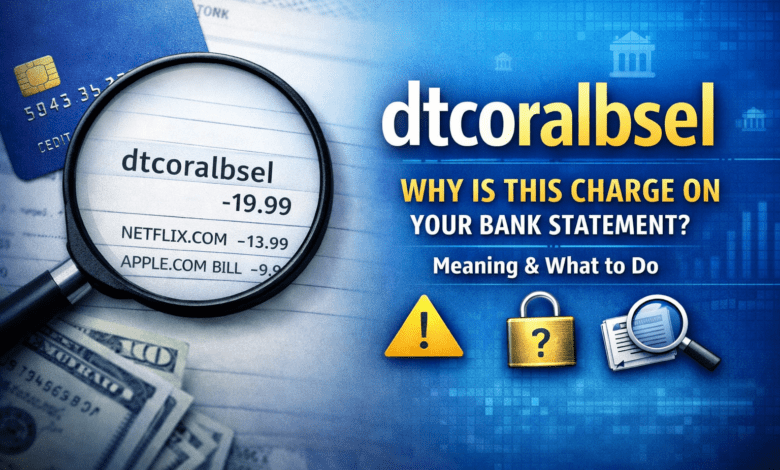
Seeing a strange charge like “dtcoralbsel” on your bank or credit card statement can be confusing and stressful. Many people immediately worry about fraud, hacking, or unauthorized transactions—especially when the name doesn’t resemble any company they remember paying.
If you’re here because you noticed dtcoralbsel on your statement and want clear answers, you’re in the right place. This in-depth guide explains what dtcoralbsel means, why it appears, whether it’s a scam, how to trace the charge, and exactly what steps to take if something looks wrong.
This article is designed to be the most complete resource online for understanding dtcoralbsel.
Introduction to dtcoralbsel
In today’s digital world, online payments, subscriptions, and automated billing systems have become normal. While this makes life easier, it also creates confusion—especially when bank statements display unclear merchant names.
One such name is dtcoralbsel.
Thousands of users worldwide search for this term every month after spotting it on:
- Credit card statements
- Debit card transaction histories
- Online banking apps
- PayPal or digital wallet records
The lack of clear branding makes dtcoralbsel look suspicious, even though it often isn’t.
Understanding what dtcoralbsel actually represents can save you unnecessary panic, help you identify legitimate purchases, and protect you from real fraud when it does occur.
What Does dtcoralbsel Mean?
dtcoralbsel is not a company name that consumers directly interact with. Instead, it is a billing descriptor—a shortened or coded merchant identifier used by banks and payment processors to label transactions.
Key points:
- It is not usually the brand name you signed up with
- It may represent a third-party payment processor
- It can relate to digital services, subscriptions, or online purchases
- The name is often truncated or system-generated
This is why searching “dtcoralbsel” often leads to confusion and multiple explanations.
Why dtcoralbsel Appears on Bank Statements
Banks do not always display full business names. Instead, they show billing descriptors created during payment processing.
Reasons dtcoralbsel appears:
- Character limits on banking systems
- Use of intermediary payment platforms
- Automated merchant ID abbreviations
- International transaction formatting
In many cases, the real merchant name exists behind the scenes, but your bank only shows dtcoralbsel.
Is dtcoralbsel a Scam or Fraud?
Short answer: Not automatically.
The presence of dtcoralbsel does not mean your card was hacked.
However, context matters.
dtcoralbsel is likely legitimate if:
- The amount matches a recent purchase
- The charge date aligns with a subscription renewal
- You recently signed up for a service or trial
dtcoralbsel may be suspicious if:
- You have no memory of the transaction
- The charge repeats without explanation
- The amount changes unexpectedly
- You see multiple charges in a short period
In other words, dtcoralbsel itself is neutral—the real issue is whether the underlying transaction is authorized.
Common Types of Transactions Linked to dtcoralbsel
Based on user reports and transaction patterns, dtcoralbsel is commonly associated with:
1. Online Subscriptions
- Digital tools
- Media services
- Educational platforms
- Software trials that convert to paid plans
2. One-Time Digital Purchases
- E-books
- Online courses
- Downloadable content
- Templates or resources
3. Recurring Monthly Charges
- Auto-renew memberships
- SaaS platforms
- Cloud services
4. Third-Party Payment Processing
- When a merchant uses an external billing system
This explains why many people forget where the charge came from.
Why the Name Looks Random or Coded
dtcoralbsel looks strange because it is not meant for consumers—it’s designed for bank systems.
Reasons for the odd format:
- Merchant IDs are shortened automatically
- Words are merged to fit character limits
- Payment gateways rename transactions internally
- International processing strips branding
This results in confusing names like dtcoralbsel instead of recognizable brands.
How Banks and Payment Processors Use Billing Descriptors
Billing descriptors serve one main purpose: identifying transactions within financial networks.
They are:
- Created when a merchant registers with a payment processor
- Approved by card networks (Visa, Mastercard, etc.)
- Shared across banking systems
Unfortunately, they are not optimized for customer clarity, which is why names like dtcoralbsel exist.
Real-World Scenarios Where dtcoralbsel Appears
Let’s look at realistic situations:
Scenario 1: Forgotten Free Trial
You signed up for a trial weeks ago. After it expired, billing began under dtcoralbsel.
Scenario 2: Digital Product Purchase
You bought a one-time product from a website using a third-party checkout system.
Scenario 3: Subscription Renewal
A service you use renews monthly, but its processor shows dtcoralbsel instead of the brand name.
Scenario 4: Mobile App Payment
An in-app purchase processed externally shows up as dtcoralbsel.
How to Identify the Source of a dtcoralbsel Charge
Before disputing anything, try this methodical approach:
Step 1: Match the Amount
Check if the charge matches:
- Subscription prices
- Trial conversions
- Past purchases
Step 2: Review Your Email
Search your inbox for:
- Payment confirmations
- Welcome emails
- Subscription notices
Step 3: Check Your Apps & Accounts
Look at:
- Active subscriptions
- Recently downloaded apps
- Services linked to your card
Step 4: Contact Your Bank
Banks can:
- See the full merchant profile
- Provide transaction metadata
- Confirm location and processor
This step alone resolves most confusion.
Step-by-Step: What to Do If You Don’t Recognize dtcoralbsel
If you still don’t recognize the charge:
- Do not panic
- Avoid immediate card cancellation unless fraud is clear
- Contact your bank’s support line
- Ask for merchant details and authorization method
- Monitor your account closely
Acting calmly ensures better outcomes.
When You Should Dispute the Charge
You should dispute dtcoralbsel if:
- The bank confirms it’s unauthorized
- The merchant cannot be identified
- Charges continue after cancellation
- The amount is incorrect
Most banks allow disputes within 30–90 days, depending on policy.
How to Get a Refund for dtcoralbsel
Refund options include:
- Merchant refund (if identified)
- Bank chargeback
- Subscription cancellation
Keep records:
- Screenshots
- Email confirmations
- Transaction IDs
These improve refund success rates.
How Long dtcoralbsel Charges Usually Last
This depends on the transaction type:
| Charge Type | Duration |
|---|---|
| One-time purchase | Appears once |
| Monthly subscription | Until canceled |
| Annual billing | Once per year |
| Trial conversion | Begins after trial |
Recurring charges stop only when properly canceled.
Can dtcoralbsel Be a Subscription?
Yes—very often.
Many dtcoralbsel charges are:
- Auto-renewing
- Hidden behind trial signups
- Processed by third-party systems
This is why reviewing subscriptions regularly is essential.
How to Prevent Confusing Charges in the Future
Follow these best practices:
- Use a dedicated card for subscriptions
- Cancel trials immediately after signup
- Keep a list of active services
- Review statements weekly
- Use banking alerts for new charges
Small habits prevent big headaches.
Frequently Asked Questions (FAQ)
Is dtcoralbsel a real company?
Not usually. It’s a billing descriptor, not a consumer-facing brand.
Can dtcoralbsel steal my money?
No—but an unauthorized transaction behind it can.
Why can’t I Google the company?
Because the name is system-generated and not public-facing.
Should I block my card immediately?
Only if fraud is confirmed.
Can I get my money back?
Yes, in most cases—through refunds or disputes.
Final Thoughts and Summary
Seeing dtcoralbsel on your bank statement can be alarming—but in most cases, it’s simply a technical billing label, not a scam.
The key is understanding:
- What billing descriptors are
- How subscriptions work
- When to investigate further
By following the steps in this guide, you can confidently determine whether a dtcoralbsel charge is legitimate or requires action.